Your entire online presence is sitting on a platform that can delete your business presence before you finish your morning coffee. No warning. No appeal. No timeline for getting it back.
That’s not a scare tactic — it’s just how rented land works.
You built it. You just don’t own it.
Think about what you’ve put into your Facebook page. Years of posts. Hundreds of reviews. Customers who found you there and kept coming back. It feels like yours — because you built it.
But Facebook can suspend it, restrict it, or take it down entirely, and there’s nothing you can do about it. Their platform, their rules. Same goes for your Google Business Profile, your Instagram, your Nextdoor listing. You’re a tenant. They’re the landlord.
Contractors understand the difference between renting and owning better than most people. You wouldn’t build a shop on land you’re leasing month-to-month with no contract. So why is that exactly what most trade businesses do online?
This isn’t hypothetical — it’s happening right now
Facebook page hacks and suspensions aren’t rare. One workwear company had their page taken over overnight and estimates it cost them around $25,000 in lost revenue. Getting it back took weeks — and only happened because the owner knew someone who knew someone at Meta. Most people aren’t that lucky.
Google Business Profile suspensions have increased by more than 80% between 2023 and 2024, and the industries getting hit hardest are plumbing, HVAC, and roofing — the exact trades most likely to rely on a GBP as their primary online presence. Appeals now take up to five weeks. During that time, your business doesn’t show up in local search. At all.
The industries hit hardest by Google Business Profile suspensions? Plumbing, HVAC, and roofing. If your phone rings from Google — and you have no website — a suspension means silence.
Sometimes it’s a hack. Sometimes it’s an algorithm flagging something suspicious. Sometimes there’s no explanation at all. The point is: it can happen, it does happen, and when it does, you have zero control.
Your website is the one thing nobody can shut off
A website isn’t just another online profile. It’s the only piece of digital real estate you actually control.
Your domain name is yours. The content is yours. The Google rankings you’ve earned point to an address you own. If you cancel your hosting tomorrow and move to a different provider, everything comes with you — your content, your photos, your pages. Nobody can suspend it, restrict it, or change its rules on you overnight.
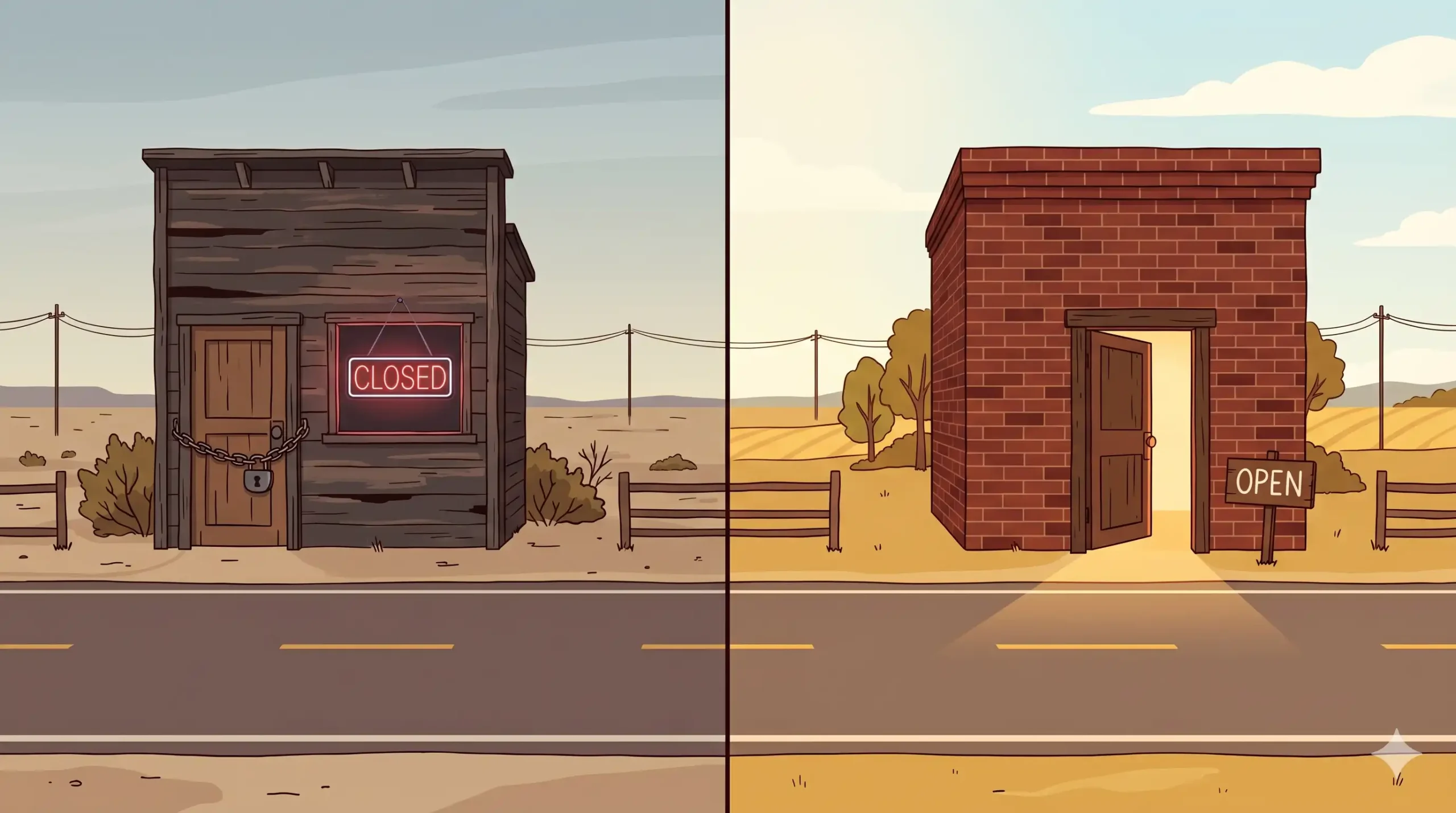
Think of it this way: your website is the shop. Social media, your Google listing, Nextdoor — those are the signs out front pointing people to the shop. Signs are great. But you still need a shop.
And just to be straight with you: even if someone else hosts your site, you still own the domain and the content. That’s the difference. A host can be swapped out in an afternoon. A Facebook page you’ve lost is gone.
What this means practically
Keep using Facebook. Keep your Google Business Profile. Those channels work and they’re worth maintaining. But treat them as traffic sources, not as your home base.
Every piece of content you create, every review you earn, every customer who finds you online — it should all point back to something you own. Right now, for most trade businesses, that something doesn’t exist.
If your whole online presence lives on platforms you don’t control, you’re one algorithm update — or one bad morning — away from silence.